LabWare vs. LabVantage vs. QBench: Which LIMS is Best?

If you're comparing LabWare, LabVantage, and QBench, the most useful question isn't which platform has the longest feature list. It’s actually which one can support your samples, testing, results, approvals, and reporting without creating unnecessary work for your team.
The short answer: QBench is a strong fit for testing and manufacturing quality control (QC) labs that want a configurable, cloud-based LIMS with no-code workflow tools and published starting prices. LabWare offers broad LIMS and electronic lab notebook (ELN) capabilities with several deployment options. LabVantage offers an integrated laboratory informatics platform that includes LIMS, ELN, laboratory execution system (LES), and scientific data management system (SDMS) capabilities.
All three can support laboratory workflows, and both LabWare and LabVantage offer cloud deployments. The best choice depends on what your lab needs to manage, which changes your staff will own, and what is included in the vendor's proposal.
LabWare vs. LabVantage vs. QBench: Side-by-Side Comparison
Sources: QBench pricing, LabWare deployment and product information, LabVantage deployment options, and G2 listings for QBench, LabWare, and LabVantage. G2 ratings and review counts checked October 28, 2026; they may change. Best-fit descriptions reflect the published functionality and are not standardized product tests.
What Should You Look for in a LIMS?
A laboratory information management system (LIMS) should help you manage samples and the data associated with testing. Before comparing vendor demonstrations, define the actual steps your lab needs the software to support.
Can It Handle Your Everyday Testing Workflow?
Follow a sample from receipt through test assignment, results entry, review, and final reporting. If you work in manufacturing QC, include incoming materials, batches, specifications, and the information your quality team needs to make release decisions. If you work in contract testing, include customer-specific methods, reports, and sample-status requests.
Then ask each vendor to demonstrate your workflow rather than a generic example. A list of supported features won't show whether the steps connect in a way that works for your team. Our LIMS evaluation criteria and checklist provides a framework for comparing those details.
What Can Your Team Configure Without Custom Development?
Configurable software lets authorized users make changes through built-in settings and tools. Customizable software can also support deeper changes through scripting, development, or professional services. Many platforms support both approaches.
For example, ask what happens when you introduce a new customer field, modify a report, or change an approval rule. Can your lab administrator do it? Does it require training, scripting, or vendor assistance? None of those answers is automatically a problem. What matters is knowing who owns the work and what it costs.
For a deeper explanation, read configurable vs. customizable LIMS: which is right for your lab?.
How Will It Connect With Instruments and Other Systems?
Identify the instruments, file formats, and software your lab uses before signing a contract. Ask how results are imported, how errors are reviewed, and whether an integration requires a separately licensed module or professional services.
QBench offers integrations and a RESTful API; API access and file-parser instrument integration are included from its Growth plan upward. LabWare describes LabStation as software for connecting laboratory instruments directly to its LIMS. Similarly, LabVantage documents instrument and system integration capabilities through its laboratory informatics platform. The relevant question is how each vendor would connect your systems.
What Support, Controls, and Change Management Do You Need?
Ask who maintains integrations, handles support requests, and tests changes after upgrades. For regulated or accredited labs, review your requirements for permissions, records, approvals, and software validation for intended use. For example, A2LA's guidance on ISO/IEC 17025 Clause 7.11 explains why laboratories must confirm that software performs according to their specific needs. Selecting a LIMS does not, by itself, establish regulatory compliance or accreditation. Your evaluation should distinguish product capabilities from implementation services and confirm both in the contract.
A Closer Look at Each LIMS
QBench: A Configurable LIMS for Testing and QC Workflows
QBench is a cloud-based LIMS built around orders, samples, tests, worksheets, results, reports, and configurable automations. Its built-in tools let authorized users add custom fields, manage permissions, adapt reports, and create no-code workflows. The QBench workflow automation tools support actions such as status updates, report generation, and routing repetitive steps.
QBench's published plans also make it possible to distinguish core functions from additional modules. The Foundation plan includes sample and testing workflows, worksheets, reporting, configuration, and the Automations Engine. Growth adds the API, Customer Portal, inventory management, and file-parser instrument integration. Advanced adds integrated quality management and billing capabilities. You can review the exact inclusions on the QBench pricing page.
EO Science Lab, a purity-testing and R&D laboratory for an essential oils business, had been using spreadsheet manifests and separately stored instrument reports to track samples and results. Its supervisor, Megan, had previously used seven LIMS platforms, including LabWare and LabVantage. The EO Science Lab case study describes how the team used QBench worksheets, an instrument-data file parser, and a Customer Portal to bring testing information and report access into one system.
Megan described QBench's configuration tools this way:
“It is highly configurable while not overwhelming."
Support is another important part of the LIMS decision. QBench's training and professional services are delivered by Technical Account Managers who have worked in laboratories. Nick Culhane, Lab Manager at Akoya Biosciences, shared his experience with QBench:
“The customer support is helpful and responsive.”
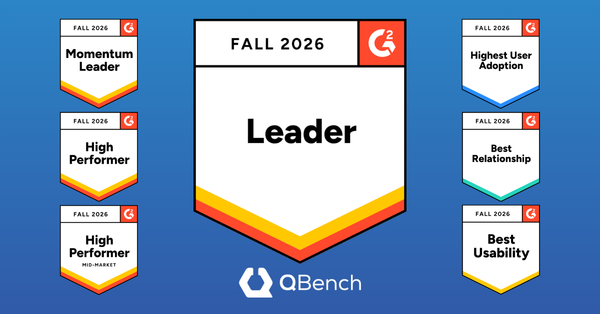
According to QBench's published Fall 2026 G2 results, the platform ranked #1 on the LIMS Grid Report and Usability Index. It is worth evaluating when sample processing, QC reviews, customer reporting, and day-to-day workflow configuration are your priorities. If your primary requirement is research experiment documentation, evaluate dedicated ELN capabilities as well.
LabWare: Broad LIMS and ELN Capabilities With Deployment Choices
LabWare provides LIMS capabilities for sample and lot management, stability studies, environmental monitoring, reporting, and instrument interfacing. It also offers an electronic laboratory notebook for experimental records and associated laboratory work.
According to LabWare's published LIMS deployment options, laboratories can choose LabWare SaaS, LabWare Hosted, deployment through a cloud provider of their choice, or a self-hosted installation. LabWare notes that availability of its SaaS and hosted options varies by region.
LabWare supports configuration as well as scripting. Its LIMS Basic macro scripting language is used for calculations, event triggers, and automation scripts. This can support specialized workflows beyond standard configuration tools.
If LabWare is on your shortlist, ask which requirements can be handled with configuration, which call for LIMS Basic, and who will maintain any custom work. Also confirm whether the ELN and integrations you need are included in your proposed package. LabWare can be a strong candidate for organizations with broad laboratory requirements and resources to manage a tailored setup.
LabVantage: An Integrated Laboratory Informatics Platform
LabVantage provides a laboratory informatics platform spanning LIMS, ELN, LES, and SDMS capabilities. That makes it relevant to laboratories that want to evaluate experimental documentation, laboratory execution, and scientific data management alongside operational sample tracking.
Its deployment choices include on-premises, Standard SaaS, and Enterprise SaaS. Importantly, LabVantage offers no-code configuration; it should not be described as a system where every workflow change requires custom development.
LabVantage specifies different capabilities for its Standard SaaS and Enterprise SaaS editions. Standard SaaS supports configurable features but does not permit customization, including changes to core business logic or custom integrations with third-party applications. Enterprise SaaS supports more extensive configuration, customization, and integration.
For your evaluation, ask LabVantage to demonstrate the specific edition under consideration. Confirm which informatics components are licensed, how data moves between them, and which changes your staff can manage directly.
For a wider vendor shortlist, see our LabWare alternatives and LabVantage alternatives.
What Is the Difference Between Cloud-Based and On-Premises LIMS?
QBench is offered as cloud-based SaaS, while LabWare and LabVantage provide multiple deployment options, including SaaS and on-premises configurations. Hosting, software updates, infrastructure management, and integration responsibilities vary by deployment. Ask each vendor which tasks are included in its proposal and which remain with your laboratory. An on-premises deployment generally puts more infrastructure responsibility on your own IT team, while hosted and SaaS arrangements can shift that work to a provider.
Learn more about the benefits of a cloud-based LIMS compared with on-premises software.
How Much Do QBench, LabWare, and LabVantage Cost?
You cannot compare these platforms reliably using a single per-user figure unless the included modules, deployment model, services, and number of users are equivalent.
QBench Pricing
QBench publishes annual starting prices for five-user plans, with volume discounts starting at 10 users:
- Foundation: $16,500 per year for five users.
- Growth: $19,500 per year for five users.
- Advanced: $25,500 per year for five users.
- Enterprise: Custom pricing for organizations with 50 or more users.
These are published starting prices, not a guarantee of total project cost. QBench separately lists managed integrations starting at $1,500 per year, training at $5,000-10,000, and professional services priced according to scope. Check the current pricing and feature breakdown for the plan that includes your requirements.
Estimate the value of staff time saved with our LIMS ROI Calculator, then compare it with your selected QBench subscription. Results are estimates and exclude implementation, training, integrations, and other project costs.
LabWare Pricing
LabWare pricing depends on the selected product and deployment. Buyers should request an itemized quote based on their requirements.
Ask LabWare for the software, hosting or infrastructure, ELN, integration, implementation, support, and any applicable maintenance charges for your actual requirements.
LabVantage Pricing
LabVantage does not display a standardized starting price in its G2 pricing information. Request a proposal for the relevant Standard SaaS, Enterprise SaaS, or on-premises edition, specifying required modules, integrations, services, and support.
A perpetual license generally involves an upfront license payment and potentially separate maintenance; a SaaS subscription uses recurring payments for access under contract. Professional services may be charged separately for setup, migration, integrations, or specialized changes. Compare both first-year and ongoing costs rather than treating licensing as the full price.
For a more complete budgeting framework, see How Much Does a LIMS Cost?.
How Should You Compare LIMS Vendors in a Demo?
Ask each vendor to demonstrate the same workflow using your lab's requirements. This could include receiving a sample, assigning tests, importing instrument results, reviewing an exception, and generating a final report.
For each step, confirm whether the capability is included in the proposed plan, what your team can configure independently, and whether additional services or integrations are required. If your lab handles materials or manufacturing QC, the materials testing LIMS guide can help you prepare use-case-specific questions.
See QBench in Action
If your priority is to manage samples, testing, reviews, and reporting in a configurable cloud-based LIMS, we'll show you how QBench handles a workflow from your lab. You can also ask which capabilities are available in each plan and what work may be needed to connect your instruments and other systems.
Frequently Asked Questions
What Is the Difference Between LabWare and LabVantage?
Both offer laboratory information management and electronic laboratory notebook capabilities. LabWare publishes multiple hosting options and supports advanced scripting through LIMS Basic. LabVantage offers an integrated LIMS, ELN, LES, and SDMS platform, with different configuration and customization options in its SaaS editions. The relevant differences depend on the modules and deployment you select.
How Much Does LabWare LIMS Cost?
LabWare pricing varies by product, deployment, and configuration. Buyers should request a customized, itemized quote based on their lab’s specific requirements.
How Much Does LabVantage Cost?
LabVantage does not publish a standard starting price on G2. Request an itemized quote identifying the deployment edition, required LIMS or other informatics modules, integration work, implementation services, and recurring support costs.
Are LabWare and LabVantage Available in the Cloud?
Yes. LabWare offers SaaS, vendor-hosted, customer-cloud, and self-hosted options. LabVantage offers Standard SaaS, Enterprise SaaS, and on-premises deployment. Ask what infrastructure, upgrades, and configuration responsibilities are included in the edition you are considering.
What Is LIMS Basic?
LIMS Basic is LabWare's embedded scripting language for calculations, event triggers, and automation scripts. It is one of the ways LabWare can support specialized workflows. If your project depends on scripts, establish who will write, test, and maintain them.
When Is an ELN a Better Fit Than a LIMS-First Platform?
An electronic laboratory notebook focuses on recording experiments, observations, and related research work. A LIMS typically focuses on operational workflows such as samples, tests, results, and reporting. If experimental documentation is your primary requirement, evaluate the ELN capabilities of LabWare and LabVantage. See which lab software you actually need for a fuller breakdown.