LIMS Alternatives: Compare QBench, Benchling, Labguru, LabVantage, LabWare, and Scispot

Looking for an alternative to Benchling, Labguru, LabVantage, LabWare, or Scispot? The right choice depends on whether your lab primarily manages research experiments, routine testing, or both.
The short answer: QBench is a strong fit for contract testing and quality control (QC) labs that need configurable sample-to-report workflows. Benchling and Labguru offer extensive research and electronic lab notebook (ELN) capabilities. LabWare and LabVantage provide broad laboratory informatics functionality and multiple deployment choices. Scispot's Digital Brain offering combines laboratory software, connected data, and implementation services for defined workflows.
Here's how the six platforms compare.
How Do Six LIMS and ELN Platforms Compare?
G2 ratings and review counts checked November 12, 2026; they may change. "Typical use case" is QBench's editorial assessment of published product information, not a standardized hands-on ranking. QBench publishes this comparison and is one of the vendors included. Features, modules, validation support, and services depend on the selected plan, deployment, and contract. Public prices are not like-for-like total-cost quotes.
Product and pricing sources: QBench, Benchling, Labguru, LabVantage, LabWare, and Scispot. G2 scores can be checked on the corresponding QBench, Benchling, Labguru, LabVantage, LabWare, and Scispot profiles.
Should You Choose a LIMS, an ELN, or Both?
A laboratory information management system (LIMS) organizes testing operations. In a contract lab, that may mean receiving customer samples, assigning tests, collecting results, routing exceptions for review, and producing certificates of analysis (COAs). Manufacturing quality control may also involve batches, specifications, and release-related records.
An electronic lab notebook (ELN) focuses on the experimental record: protocols, observations, research data, and collaboration. That matters when teams are designing experiments and documenting work that changes from project to project.
The distinction isn't absolute. Benchling, Labguru, and Scispot offer LIMS-related functions, while LabWare and LabVantage also offer ELN capabilities. Choose according to the workflow you need, not a vendor's category label. Our guide to LIMS, ELN, QMS, and related systems explains where the categories overlap.
How Should You Evaluate LIMS Alternatives?
Start with one real process instead of a generic feature checklist. For example, follow a sample that requires multiple tests. An instrument produces a result outside specification, a reviewer needs to evaluate it, and the customer expects a correctly formatted COA. The useful comparison is how each proposed system handles those steps, including the exception.
1. Match the System to Your Main Workflow
List the records, handoffs, and decisions your team manages every day. Contract labs may prioritize customer orders, turnaround requirements, and reporting. QC labs may need specifications, batches, and review steps. Research teams may rely on experiment records and biological sample relationships. A strong platform in one environment is not automatically the right fit for another.
2. Understand Configuration and Customization
Use a change your staff actually makes: adding a test field, updating a method, adjusting permissions, or changing a report template. Determine what an administrator can configure and what requires scripts, vendor assistance, or a separate service. Vendor support is not inherently a disadvantage; ownership, review requirements, and cost are what matter. See our configurable vs. customizable LIMS guide.
3. Check Automation and System Connections
Map how an instrument file reaches the correct sample and test. Include missing fields, rejected results, and data corrections. If your lab also uses an ERP, accounting application, or ELN, document which system owns each record and the direction of data exchange. A listed integration capability doesn't establish that your particular connection is included.
4. Review Hosting, Access, and Quality Controls
Compare deployment requirements, user roles, approvals, electronic signatures, and relevant records. For regulated or accredited labs, software may support applicable requirements, but the laboratory remains responsible for confirming that it works for its intended use, including validation where required. A2LA's discussion of ISO/IEC 17025 Clause 7.11 provides useful context.
5. Define Migration and Implementation Scope
Identify the sample histories, methods, attachments, reports, integrations, permissions, and training needed for the proposed rollout. Decide what must be available at initial go-live and what can remain archived or move later. A project plan should reflect migration, integration, training, testing, and validation needs rather than a generalized implementation promise.
6. Compare Costs and Support on Equal Terms
Request first-year and ongoing costs for the same scope: users, modules, integrations, data migration, training, professional services, hosting, and support. Compare who maintains configuration after implementation and what changes require additional work. Our LIMS cost guide and LIMS evaluation checklist can help organize the comparison.
What Are the Best Benchling Alternatives?
For a lab centered on routine testing and customer reporting, QBench, LabWare, and LabVantage are relevant Benchling alternatives. If research and experimental data remain central, Labguru and Scispot are also relevant.
Benchling connects experimental records, scientific entity registration, samples, inventory, results, and workflows. It also supports instrument connections and structured testing activities, so describing it as only a digital notebook would understate its capabilities.
A biotech group developing assays may prioritize experiments, molecular entities, and sample lineage. If your lab primarily manages customer orders, repeatable testing, result approvals, and COAs, QBench is worth considering for its configurable sample-to-report workflows.
Read The Top 9 Benchling Alternatives or the focused Benchling vs. Labguru vs. QBench comparison.
What Are the Best Labguru Alternatives?
For labs evaluating Labguru, QBench, LabWare, and LabVantage offer additional LIMS options. Benchling and Scispot are also relevant for research-data workflows.
Labguru, part of Cenevo, combines an ELN, LIMS, inventory management, and equipment tools. It also offers automation as an add-on, including capabilities for service-lab reporting and certificate-of-analysis (COA) creation. These functions extend beyond experiment documentation.
Labguru also supports service-lab reporting and COA creation, so the comparison comes down to how each platform handles your workflows. If your lab prioritizes repeatable test panels, result reviews, and customer reporting in a configurable LIMS, QBench is worth considering.
Our eight best Labguru alternatives article covers more choices.
What Are the Best LabVantage Alternatives?
QBench and LabWare are two platforms to consider alongside LabVantage, with different approaches to deployment and laboratory informatics.
LabVantage offers LIMS, ELN, laboratory execution system (LES), and scientific data management system (SDMS) capabilities. Its deployment options include Standard SaaS, Enterprise SaaS, and on-premises. LabVantage's deployment guidance distinguishes the two SaaS offerings: Standard SaaS supports configuration for more typical workflows, while Enterprise SaaS allows broader customization and third-party integrations.
Those deployment choices matter for labs with specific hosting, customization, or integration requirements. If your lab is looking for a cloud-based LIMS with no-code configuration, sample-to-report workflows, and published starting prices, QBench is worth considering alongside LabVantage.
Explore The Top 8 LabVantage Alternatives and LabWare vs. LabVantage vs. QBench.
What Are the Best LabWare Alternatives?
QBench and LabVantage are relevant alternatives to LabWare for labs comparing sample management, configuration, deployment, and reporting needs.
LabWare provides sample and lot management, stability workflows, instrument interfacing, reporting, and ELN options. Organizations can choose among SaaS, hosted, customer-cloud, and self-hosted deployment arrangements, subject to the proposed solution and availability. That flexibility can matter when an organization's IT requirements or testing processes call for a particular arrangement.
If your lab prefers cloud-based software and wants administrators to configure routine testing, approvals, and reporting using built-in tools, QBench is worth considering. When comparing it with LabWare, look at how each system handles method changes, instrument connections, and ongoing support.
See The Top 9 LabWare Alternatives and LabWare vs. STARLIMS vs. QBench.
What Are the Best Scispot Alternatives?
QBench is worth considering for LIMS-centered sample-to-report workflows. Benchling and Labguru are also relevant when research records and experimental data are the priority.
Scispot's Digital Brain platform connects laboratory data, instruments, and applications, with LIMS, ELN, and automation capabilities. It also provides implementation and integration services based on each lab's requirements.
Scispot's pricing is custom and annual, with unlimited users rather than a published per-user starting price. If your lab primarily needs a configurable cloud LIMS for sample management, testing, and reporting, QBench is worth evaluating. Compare the included capabilities, services, and ongoing costs to understand the differences.
Read The Top 8 Scispot Alternatives for a wider shortlist.
When Is QBench the Right LIMS Alternative?
QBench is built around the testing workflow: orders, samples, tests, batches, results, and reports. Its no-code tools allow lab administrators to configure fields, role-based permissions, automations, worksheets, and report templates for many routine changes. These are important features when test methods, approval requirements, or customer report formats change.
Plan inclusions are important. QBench's published pricing starts at $16,500 per year for five users on Foundation, which includes core testing, no-code configuration, reports, automations, History Entries, eSignatures, and approvals. Growth starts at $19,500 per year for five users and adds File Parser instrument integration, API access, inventory management, and the Customer Portal. Advanced starts at $25,500 per year for five users and adds QMS, equipment management, and billing management. Enterprise has custom pricing and includes Divisions, the separately listed Audit Trail feature, and other enterprise capabilities. Training, managed integrations, and professional services can add costs.
Customer experience provides a practical example. At EO Science Lab, sample information and instrument reports were spread across spreadsheets and folders. According to the published customer story, answering requests for sample statuses and results previously took 20 to 30 minutes. With QBench and its Customer Portal, the lab reported completing those requests in under two minutes. Megan, the lab supervisor, had used seven other LIMS platforms, including LabWare and LabVantage. She described QBench as "highly configurable while not overwhelming." This is one customer's reported result, not a guaranteed outcome.
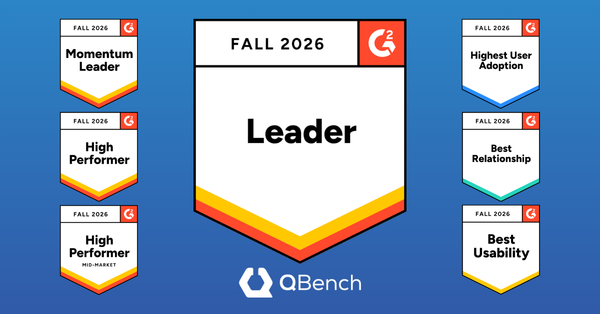
Across G2's Fall 2026 LIMS and Lab Inventory Management reports, QBench earned six first-place rankings, including recognition for usability, customer relationships, and momentum. These results reflect customer feedback and provide another useful consideration when evaluating LIMS options.
QBench is cloud SaaS, not an on-premises deployment. If local hosting is mandatory, consider vendors that offer it. For multi-site operations, review QBench's Enterprise features and administration model against your needs rather than assuming the platform is unsuitable based on company size.
See How QBench Handles Your Lab's Workflow
Comparing software is easier with a real process in front of you. Bring us a sample intake workflow, an instrument output file, a result requiring review, or a customer report. Request a demo to discuss how QBench can support your requirements, which plan is relevant, and whether additional configuration or services may be needed.
Frequently Asked Questions About LIMS Alternatives
Can You Keep an Existing ELN When Switching LIMS?
Often, yes. If the two products support suitable data exchange, your lab can retain an ELN for experimental records and use a separate LIMS for operational testing. Define which system owns sample identifiers, results, and approvals, along with how changes move between systems. Integration availability and scope depend on the products selected.
Can Historical Sample Records Be Migrated Into a New LIMS?
Many vendors support data import or migration services, but the scope depends on the source system and record types. Inventory the sample histories, methods, test results, attachments, and relevant audit records you need to retain. Decide what must be migrated, what can remain accessible in an archive, and how transferred information will be checked before use.
How Can You Compare LIMS Prices When Vendors Use Different Pricing Models?
Request proposals covering the same users, modules, integrations, migration scope, training, and support responsibilities. Some vendors publish subscription starting prices; others quote a configuration or complete project. Compare first-year and ongoing total costs rather than per-user figures in isolation.